For practitioners
Practitioner Training
I've spent much of my career teaching practitioners how to work with the body in ways that are safe, responsive, and deeply respectful of the person or groups in front of them.
My trainings bring together nervous system science, embodied practice, and the kind of skills that are developed through experience: learning to track, witness, attune, and respond to what is actually happening in the moment. Whether you're learning a specific modality or deepening work you already practice, my intention is to help you become more skillful, more embodied, and more trusting of both yourself and the intelligence of the people you work with.
Below you'll find two distinct certification pathways. Each is designed for a different kind of practitioner, but both are rooted in the same respect for the body and the nervous system.
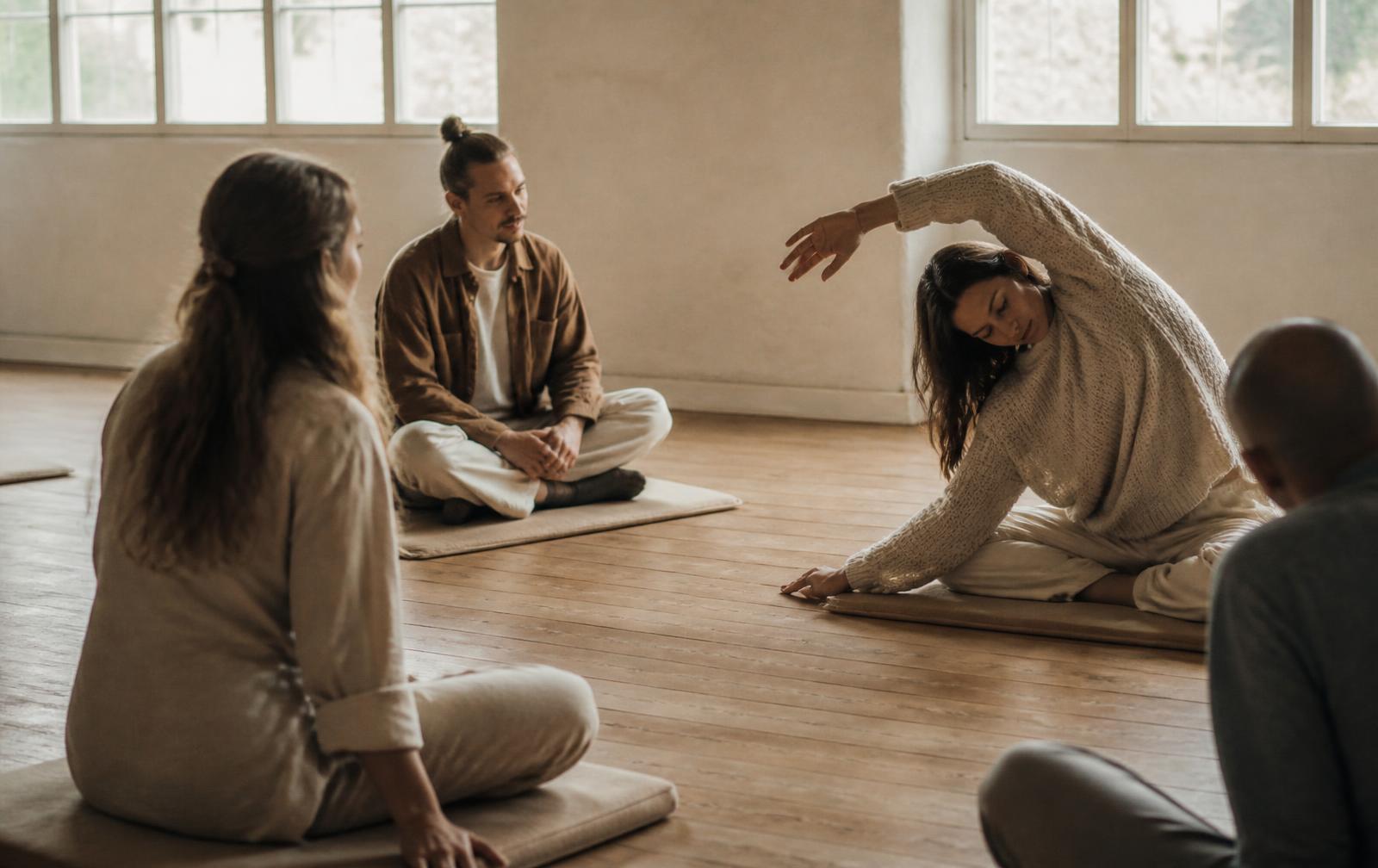
Curious about becoming a TRE® Provider?
Join me for a free online TRE® experience
If you’ve been considering becoming a TRE® Provider and are curious about the upcoming TRE® Provider Training beginning January 2027, I’m offering two free online opportunities to experience the practice, learn more about the training, and get a feel for my approach to this work.
Each 90-minute gathering will include an introduction to TRE®, a guided experiential practice, and time to learn more about the provider training and ask questions.
These sessions are offered specifically for people who are genuinely interested in exploring the January 2027 TRE® Provider Training. You do not need to have decided that the training is for you. This is a chance to experience the work, meet me, and discover whether you feel drawn to take the next step.
Space is limited. There is no cost to attend. Advance registration is required.
Come experience the practice in your own body, bring your questions, and learn more about what it means to train as a TRE® Provider.
Upcoming trainings
Two certification pathways
Certification pathway 1
TRE® Provider TrainingFor those who wish to facilitate Tension & Trauma Releasing Exercises with individuals and groups. A year-long, three-phase certification.
Location
San Diego, California
Begins
January 2027
Format
3 In-Person Intensives
Location
San Diego, California
Begins
January 2027
Format
3 In-Person Intensives
View details
Certification pathway 1
For those who wish to facilitate Tension & Trauma Releasing Exercises with individuals and groups. A year-long, three-phase certification.
Location
San Diego, California
Begins
January 2027
Format
3 In-Person Intensives
Location
San Diego, California
Begins
January 2027
Format
3 In-Person Intensives
The Trauma Releasing Exercises (TRE) training program is an immersive and transformational learning journey designed to equip participants with the skills, confidence, and understanding to safely facilitate TRE with both individuals and groups.
Developed from the pioneering work of Dr. David Berceli, TRE offers a powerful body-based approach to healing by activating the body's natural tremoring mechanism — an innate response that helps release accumulated stress, tension, and trauma.
Blending neuroscience, trauma education, and experiential practice, the training provides participants with a deep understanding of the neurophysiological foundations of stress, trauma, and nervous system regulation. Participants not only study the theory behind TRE, but also engage directly in the process themselves, allowing the learning to become embodied, authentic, and grounded in lived experience.
Throughout the program, participants learn how to confidently guide individuals and groups through the TRE process using a series of simple yet profound exercises that activate the body's instinctual tremor response. Strong emphasis is placed on creating a safe, supportive, and non-judgmental environment where clients can explore and release physical, emotional, and nervous system tension at their own pace.
Facilitators-in-training develop practical skills in observation, pacing, grounding, and trauma-sensitive support, while deepening their own self-awareness and capacity for presence. The training emphasizes the importance of safety, regulation, and the body's innate ability to move toward balance and healing.
At its core, the TRE training is both a professional certification pathway and a personal journey — one that empowers participants to support others in reconnecting with resilience, vitality, and a greater sense of ease.
Wondering whether this pathway is yours? Start with a conversation.
Schedule your consultation callWhat the training covers
Key components of this training
Personal Embodiment Practice
Develop a deep, experiential relationship with TRE through your own consistent personal practice and nervous system exploration.
Trauma & Nervous System Education
Learn the foundational neurophysiology of stress, trauma, regulation, and the body's innate healing responses.
TRE Facilitation Skills
Build the practical skills needed to safely facilitate TRE with both individuals and groups.
Trauma-Skilled Approach
Learn how to create safe, grounded, and supportive environments that honor each individual's unique process and pacing.
Self-Regulation & Co-Regulation
Cultivate the ability to track nervous system states, support regulation, and remain present during activation and release.
Experiential Learning & Practice
Engage in hands-on learning through partner exercises, group practice, live demonstrations, and supervised facilitation experiences.
Mentorship & Supervision
Receive ongoing guidance, feedback, and support from certified TRE trainers throughout the training journey.
Integration & Professional Development
Explore ethical facilitation, scope of practice, integration tools, and ways to authentically incorporate TRE into your personal or professional work.
Upon completion, participants are equipped to share this empowering modality with others, fostering healing and well-being on both individual and community levels.
Phase 1
View detailsDate
January 30–31, 2027
Location
San Diego, California
Hours
10:00 AM–6:00 PM PT
Format
2-Day In-Person Intensive
Embody — Personal FoundationsKey outcomes
- Develop a foundational understanding of the nervous system and its shifting states
- Explore the basic anatomy, biology, and chemistry of stress and trauma
- Learn how to safely guide your own TRE process and establish a sustainable personal practice
Phase 1
Date
January 30–31, 2027
Location
San Diego, California
Hours
10:00 AM–6:00 PM PT
Format
2-Day In-Person Intensive
Key outcomes
- Develop a foundational understanding of the nervous system and its shifting states
- Explore the basic anatomy, biology, and chemistry of stress and trauma
- Learn how to safely guide your own TRE process and establish a sustainable personal practice
Phase 1 is an invitation to experience TRE® from the inside out, beginning with your own nervous system, your own body, and your own process. Before stepping into the role of facilitator, developing a deep personal relationship with TRE is the bedrock of this training.
Through experiential practice and study, you'll begin to understand the nervous system not only intellectually, but through your own direct experience. We'll explore the physiology of stress and trauma, nervous system responsivity, and the body's innate neurogenic tremoring mechanism, while developing the skills to safely guide and respond to your own TRE process.
This phase is designed to help you cultivate a sustainable personal TRE practice while building the embodied awareness that will eventually inform how you work with others. By approaching the practice with curiosity and a beginner's mind, you begin learning one of the most important skills of facilitation: how to listen and respond to what the body is actually communicating.
During this phase, you will:
- Develop a foundational understanding of the nervous system and its shifting states
- Explore the basic anatomy, biology, and chemistry of stress and trauma
- Learn how to safely guide your own TRE process and establish a sustainable personal practice
- Deepen your relationship with the body's natural tremoring mechanism
- Explore how TRE can support the release of stress and muscular tension
- Build skills for grounding, self-regulation, and nervous system resilience
- Begin cultivating the embodied awareness and presence that will become foundational to facilitating others
Phase 1 Requirements
- 5 private TRE sessions with Jennica, online or in person
- 1 group TRE session facilitated by a certified TRE Provider
- TRE journaling
- Assigned readings
- Video learning and reflections
Phase 1 lays the foundation for everything that follows. Before we ask you to read someone else's body, respond to someone else's nervous system, or guide someone else's process, we want you to have spent meaningful time learning to listen to your own.
Phase 2
View detailsDate
April 3–4, 2027
Location
San Diego, California
Hours
10:00 AM–6:00 PM PT
Format
2-Day In-Person Intensive
Attune — Working with IndividualsKey outcomes
- Learn how to safely guide an individual through the TRE exercise sequence
- Develop foundational one-to-one facilitation skills
- Learn modifications and supportive interventions when the standard TRE template is not appropriate
Phase 2
Date
April 3–4, 2027
Location
San Diego, California
Hours
10:00 AM–6:00 PM PT
Format
2-Day In-Person Intensive
Key outcomes
- Learn how to safely guide an individual through the TRE exercise sequence
- Develop foundational one-to-one facilitation skills
- Learn modifications and supportive interventions when the standard TRE template is not appropriate
Phase 2 marks the transition from personal embodiment into the art of supporting another person through the TRE process. Building on the foundation established in Phase 1, we begin developing the practical facilitation skills, nervous system awareness, and attunement needed to work safely and effectively with individuals.
At the heart of this phase is learning to pay attention to the person in front of you. You'll begin refining your ability to track nervous system responses, read the body, recognize shifts in activation and settling, and respond with appropriate pacing, cueing, modification, or intervention.
We'll also move beyond simply learning the standard TRE sequence. Bodies are different, nervous systems are different, and the standard exercises will not serve every person in the same way. You'll learn how to modify and adapt the practice while remaining responsive to the individual, their capacity, and what their body is communicating in real time.
Through hands-on practice, observation, and feedback, you'll begin developing your own capacity to facilitate TRE with greater confidence, responsivity, and attunement.
During this phase, you will:
- Learn how to safely guide an individual through the TRE exercise sequence
- Develop foundational one-to-one facilitation skills
- Learn modifications and supportive interventions when the standard TRE template is not appropriate
- Build your ability to read the body and recognize nervous system cues
- Practice verbal cueing, pacing, and supporting self-regulation throughout a session
- Deepen your understanding of trauma-sensitive facilitation and client safety
- Strengthen your presence, confidence, and attunement as a developing TRE Provider
Phase 2 Requirements
- Practice teaching sessions with peers
- 5 individual TRE supervision sessions while facilitating a volunteer client, completed online live or through recorded sessions
- TRE journaling
- Assigned books and readings
- Video learning and reflections
Phase 2 is where the work becomes relational. You are no longer only noticing what is happening within your own nervous system. You are learning to remain connected to yourself while paying close attention to another person, and to let what you observe inform how you facilitate.
Phase 3
View detailsDate
September 11–12, 2027
Location
San Diego, California
Hours
10:00 AM–6:00 PM PT
Format
2-Day In-Person Intensive
Tend — Working with GroupsKey outcomes
- Integrate the knowledge and facilitation skills developed throughout Phases 1 and 2
- Learn how to safely facilitate TRE groups from beginning to end
- Develop your ability to track multiple nervous systems at once
Phase 3
Date
September 11–12, 2027
Location
San Diego, California
Hours
10:00 AM–6:00 PM PT
Format
2-Day In-Person Intensive
Key outcomes
- Integrate the knowledge and facilitation skills developed throughout Phases 1 and 2
- Learn how to safely facilitate TRE groups from beginning to end
- Develop your ability to track multiple nervous systems at once
Phase 3 brings the previous phases together as we move from working with individuals into the unique experience of facilitating TRE with groups.
Working with groups asks something different of a facilitator. Your attention widens. Rather than tracking one person and one nervous system, you are learning to notice what is happening across the room while remaining grounded enough to recognize when an individual needs additional support.
During this phase, you'll learn how to guide a TRE group from beginning to end, track multiple nervous systems, respond to individual needs without losing your awareness of the larger group, and work with the dynamics that naturally emerge when people practice together.
Through experiential learning, practice facilitation, observation, and feedback, you'll continue refining the skills you've developed throughout the training while learning how to tend both the individual and the whole.
During this phase, you will:
- Integrate the knowledge and facilitation skills developed throughout Phases 1 and 2
- Learn how to safely facilitate TRE groups from beginning to end
- Develop your ability to track multiple nervous systems at once
- Deepen your skills in attunement, witnessing, and group facilitation
- Continue practicing modifications and interventions within the TRE process
- Learn how to respond to an individual's needs while remaining attentive to the larger group
- Develop greater confidence and capacity as a group facilitator
Phase 3 Requirements
- 3 TRE group supervision sessions while facilitating small groups, completed online live or through recorded sessions
- TRE journaling
- Assigned readings
- Video learning and reflections
- Final competency supervision while facilitating a small group
Phase 3 is the integration of the training journey. By this point, you have spent months developing your own TRE practice, learning to work with individuals, practicing under supervision, receiving feedback, and beginning to work with groups. The intention is not simply that you know how to lead the TRE exercises, but that you have developed the embodied awareness, skill, and responsivity to meet the people in front of you.
Not sure where you'd begin? Talk it through with me first.
Schedule your consultation callThe Tension and Trauma Releasing Exercises (TRE) Training Program is tailor-made for:
- Therapists and Counselors
- Healthcare Professionals
- Bodyworkers and Massage Therapists
- Meditation and Mindfulness Instructors
- Community Leaders
- Educators
- Social Workers
- Mental Health Advocates
- Parents and Caregivers
- Personal Growth Enthusiasts
- Anyone Committed to Wellness
Is this program for you?
No matter your background, the TRE Training Program is designed to meet you where you are and guide you on a transformative journey toward becoming a confident and skilled facilitator of Trauma Releasing Exercises.
Investment
$3,950 total, covering all three weekend intensives (roughly 70 hours of live training), four private sessions with your primary trainer, nine supervision sessions, ongoing access between meetings, and the cohort community. Plan on about $250 more for books, the $50 application fee, and the $35 TRE® enrollment fee.
A non-refundable $500 deposit holds your place once you're accepted. Payment plans are available at no extra charge.
Questions about cost, timing, or payment plans? Bring them to a call.
Schedule your consultation callCertification pathway 2
Neurogenic Yoga™ & TRE® Dual CertificationFor yoga teachers who want to teach Neurogenic Yoga™ classes and facilitate TRE® one-to-one. A dual credential combining movement and tremoring.
Dates & location
To be determined
Format
3 In-Person Intensives, 3 days each
Dates & location
To be determined
Format
3 In-Person Intensives, 3 days each
View details
Certification pathway 2
For yoga teachers who want to teach Neurogenic Yoga™ classes and facilitate TRE® one-to-one. A dual credential combining movement and tremoring.
Dates & location
To be determined
Format
3 In-Person Intensives, 3 days each
Dates & location
To be determined
Format
3 In-Person Intensives, 3 days each
The Neurogenic Yoga™ & TRE® Dual Certification is an experiential training for yoga teachers and movement practitioners who wish to hold this work for others. Rooted in Dr. Berceli's method and the Neurogenic Yoga approach I developed with Maria Alfaro, the program is as much a personal practice as it is a curriculum — because the body of a facilitator is the room in which the work takes place.
Graduates are certified to teach Neurogenic Yoga in group settings and to facilitate TRE® one-to-one. This dual credential allows you to bring the tremoring response into a yoga context while also supporting individuals through the TRE process privately.
This training blends the structure of yoga — movement, breath, and sequencing — with the body's natural neurogenic tremoring mechanism. You will learn not only how to guide the tremor response, but how to prepare the body for it, how to respond when it arises unexpectedly, and how to create classes and sessions that support nervous system regulation without forcing release.
Wondering whether this pathway is yours? Start with a conversation.
Schedule your consultation callWhat the training covers
Key components of this training
Yoga & Somatic Preparation
Learn how to prepare the body through yoga-inspired movement, breath, and somatic practices so the tremoring response can emerge safely.
Neurogenic Tremoring Mechanics
Understand the physiology of the body's natural shaking response and how to guide it within a yoga class or private session.
Class Design & Sequencing
Develop the skills to build and lead Neurogenic Yoga classes that integrate movement, breath, and tremoring with sensitivity and skill.
One-to-One TRE Facilitation
Train in the fundamentals of facilitating TRE® with individuals, including pacing, tracking, and trauma-sensitive support.
Nervous System Literacy
Read activation, settling, and overwhelm in yourself and others, and learn how to respond in real time.
Embodied Facilitation Presence
Cultivate the capacity to remain grounded, responsive, and authentic while holding space for groups and individuals.
Upon completion, graduates are prepared to teach Neurogenic Yoga classes and facilitate TRE® one-to-one, with sensitivity to both the individual body and the group field.
Prerequisites
Who can begin this training
Because the Dual Certification includes professional training in Neurogenic Yoga™, participants need an established foundation in yoga practice and teaching before beginning the program.
To enter the training, you must:
- Be a certified yoga teacher with a minimum 200-hour teacher training certification
- Have been teaching yoga for at least one year by the start of the training
- Have completed at least 50 hours of yoga teaching by the start of the training
If you're interested in the Dual Certification but aren't sure whether your training or teaching experience meets these prerequisites, we can talk about that during your consultation.
Phase 1
View detailsDates, location & times
To be determined
Embody — Personal FoundationsKey outcomes
- Develop a foundational understanding of the nervous system and its shifting states
- Explore the basic anatomy, biology, and chemistry of stress and trauma
- Learn how to safely guide your own neurogenic tremoring process
Phase 1
Dates, location & times
To be determined
Key outcomes
- Develop a foundational understanding of the nervous system and its shifting states
- Explore the basic anatomy, biology, and chemistry of stress and trauma
- Learn how to safely guide your own neurogenic tremoring process
Phase 1 is an invitation to experience Neurogenic Yoga and TRE from the inside out, beginning with your own nervous system, your own body, and your own process. Before stepping into the role of facilitator, developing a deep personal relationship with the work is the bedrock of this training.
Through experiential practice and study, you'll begin to understand the nervous system not only intellectually, but through your own direct experience. We'll explore the physiology of stress and trauma, nervous system responsivity, and the body's innate neurogenic tremoring mechanism, while developing the skills to safely guide and respond to your own process.
During this phase, you will:
- Develop a foundational understanding of the nervous system and its shifting states
- Explore the basic anatomy, biology, and chemistry of stress and trauma
- Learn how to safely guide your own neurogenic tremoring process
- Establish a sustainable personal practice combining yoga and tremoring
- Build skills for grounding, self-regulation, and nervous system resilience
Phase 1 Requirements
- 5 private sessions with Jennica, online or in person
- 1 group Neurogenic Yoga or TRE session with a certified facilitator
- Journaling and assigned reflections
- Assigned readings
Phase 1 lays the foundation for everything that follows. Before we ask you to guide someone else's body, we want you to have spent meaningful time learning to listen to your own.
Phase 2
View detailsDates, location & times
To be determined
Attune — Working with IndividualsKey outcomes
- Learn how to safely guide an individual through the TRE exercise sequence
- Develop foundational one-to-one facilitation skills
- Learn modifications and supportive interventions when the standard template is not appropriate
Phase 2
Dates, location & times
To be determined
Key outcomes
- Learn how to safely guide an individual through the TRE exercise sequence
- Develop foundational one-to-one facilitation skills
- Learn modifications and supportive interventions when the standard template is not appropriate
Phase 2 marks the transition from personal embodiment into the art of supporting another person through the Neurogenic Yoga and TRE process. Building on the foundation established in Phase 1, we begin developing the practical facilitation skills, nervous system awareness, and attunement needed to work safely and effectively with individuals.
At the heart of this phase is learning to pay attention to the person in front of you. You'll begin refining your ability to track nervous system responses, read the body, recognize shifts in activation and settling, and respond with appropriate pacing, cueing, modification, or intervention.
During this phase, you will:
- Learn how to safely guide an individual through the TRE exercise sequence
- Develop foundational one-to-one facilitation skills
- Learn modifications and supportive interventions when the standard template is not appropriate
- Build your ability to read the body and recognize nervous system cues
- Practice verbal cueing, pacing, and supporting self-regulation throughout a session
Phase 2 Requirements
- Practice teaching sessions with peers
- 5 individual supervision sessions while facilitating a volunteer client
- Journaling and assigned reflections
- Assigned books and readings
Phase 2 is where the work becomes relational. You are learning to remain connected to yourself while paying close attention to another person, and to let what you observe inform how you facilitate.
Phase 3
View detailsDates, location & times
To be determined
Tend — Working with GroupsKey outcomes
- Integrate the knowledge and facilitation skills developed throughout Phases 1 and 2
- Learn how to safely facilitate Neurogenic Yoga groups from beginning to end
- Develop your ability to track multiple nervous systems at once
Phase 3
Dates, location & times
To be determined
Key outcomes
- Integrate the knowledge and facilitation skills developed throughout Phases 1 and 2
- Learn how to safely facilitate Neurogenic Yoga groups from beginning to end
- Develop your ability to track multiple nervous systems at once
Phase 3 brings the previous phases together as we move from working with individuals into the unique experience of facilitating Neurogenic Yoga with groups.
Working with groups asks something different of a facilitator. Your attention widens. Rather than tracking one person and one nervous system, you are learning to notice what is happening across the room while remaining grounded enough to recognize when an individual needs additional support.
During this phase, you will:
- Integrate the knowledge and facilitation skills developed throughout Phases 1 and 2
- Learn how to safely facilitate Neurogenic Yoga groups from beginning to end
- Develop your ability to track multiple nervous systems at once
- Deepen your skills in attunement, witnessing, and group facilitation
- Develop greater confidence and capacity as a group facilitator
Phase 3 Requirements
- 3 group supervision sessions while facilitating small groups
- Journaling and assigned reflections
- Assigned readings
- Final competency supervision while facilitating a small group
Phase 3 is the integration of the training journey. The intention is not simply that you know how to lead the exercises, but that you have developed the embodied awareness, skill, and responsivity to meet the people in front of you.
Not sure where you'd begin? Talk it through with me first.
Schedule your consultation callUpcoming Training
Details for the next Neurogenic Yoga™ + TRE® Dual Certification are currently in the works. The training may be offered in person, online, or in a hybrid format, with dates, location, tuition, and full program details to come.
If you're interested in joining a future cohort, I encourage you to schedule a consultation. We can talk about your interest in the work, answer any questions you have about the certification pathway and prerequisites, and make sure you receive upcoming training details as they become available.
Investment
Details coming soon. The investment will cover all three weekend intensives, private and supervision sessions, ongoing access between meetings, and the cohort community. Payment plans will be available at no extra charge.
Questions about cost, timing, or payment plans? Bring them to a call.
Schedule your consultation callRequired — Consultation call
Every applicant meets with a trainer first.
A consultation call is required for anyone who wants to attend either training. It's also the place to ask questions or gather more information if you're still deciding. The call can happen before or after you submit your application — whichever order suits you.
To ask a question
Write or call to talk through timing, fit, or payment before you apply — no obligation.
Application
Certification Training Application
Help us get to know you! Your responses help us understand your background, training history, and readiness for certification. Applications are reviewed individually, and we'll follow up by email with next steps. Fields marked optional may be left blank.
A consultation call with a trainer is required before you can be enrolled. You're welcome to schedule that call before or after submitting this application.